
Puppy Play Biting

How to Deal with Puppy Play Biting (Without Suppressing Normal Puppy Behaviour)
Puppy biting is one of the most common challenges new owners face. It often starts as something amusing—then quickly becomes exhausting when those sharp little teeth seem to target hands, feet, clothing, furniture, and anything that moves.
What many people don’t expect is that biting is not a “bad habit” that needs stamping out. It’s a normal developmental behaviour that sits at the intersection of play, communication, emotional regulation, and unmet needs.
The goal is not to eliminate biting entirely overnight, but to help your puppy learn what to bite instead, and how to express themselves in safer, more appropriate ways.
Why do puppies bite?
Puppies explore the world through their mouths. Just like human babies use their hands, puppies use their teeth.
If you’ve ever watched a litter of puppies together, you’ll notice constant mouth contact—gentle wrestling, grabbing, mouthing, and chasing. This is normal social learning. They are learning bite inhibition, social boundaries, and how to regulate intensity during play.
Once they come into a human home, they are expected to transfer all of this behaviour onto toys rather than skin, clothing, or furniture. That transition takes time, guidance, and consistency.
However, there are several other important drivers behind puppy biting:
1. Normal play behaviour
Biting is part of how puppies initiate interaction and play.
2. Over-arousal or over-excitement
When a puppy becomes too stimulated, their impulse control reduces, and mouth use increases.
3. Overtiredness
Puppies need a huge amount of sleep—often around 18–20 hours per day. When they don’t get enough rest, their ability to regulate behaviour decreases significantly, and biting often escalates.
4. Teething discomfort
Sore gums can lead to increased chewing and mouthing as a form of relief.
5. Frustration or unmet needs
If a puppy is understimulated, under-exercised, or confused about what to do, biting can become an outlet for excess energy or frustration.
6. Seeking interaction
For many puppies, biting is simply an attempt to engage you in play.
When hands become part of the problem

One important piece that is often overlooked is the role human behaviour plays in shaping biting patterns.
Puppies do not naturally distinguish between “acceptable” and “not acceptable” targets. They learn through repetition and outcome.
Hands and feet are especially attractive because they are:
constantly moving
used during play
used during handling and restraint
associated with sudden interruption or correction
involved in putting on equipment like collars and harnesses
From the puppy’s perspective, hands can become:
highly stimulating (fun chase targets)
confusing (sometimes play, sometimes restriction)
or frustrating (when interaction suddenly stops)
This combination can increase mouthing behaviour significantly.
In addition, biting often increases in moments where the puppy:
needs the toilet
is already overexcited
is overtired
is being handled when they would rather not be
is struggling to settle in a new environment
Understanding this context is key. Puppy biting is rarely random—it is usually information.
What to do when your puppy is biting
The most effective approach is to think in two layers:
1. Immediate management (what to do in the moment)
2. Long-term behaviour change (what reduces biting overall)
Immediate management: redirect, don’t wrestle
When your puppy starts biting hands, clothing, or feet, the goal is not to escalate excitement or create a conflict. Instead, you want to immediately redirect the behaviour onto something more appropriate.
Use a clear alternative target
Have a suitable toy ready at all times. Ideally, this should be something that:
can be moved like prey
allows distance between hands and teeth
is engaging enough to compete with your movement
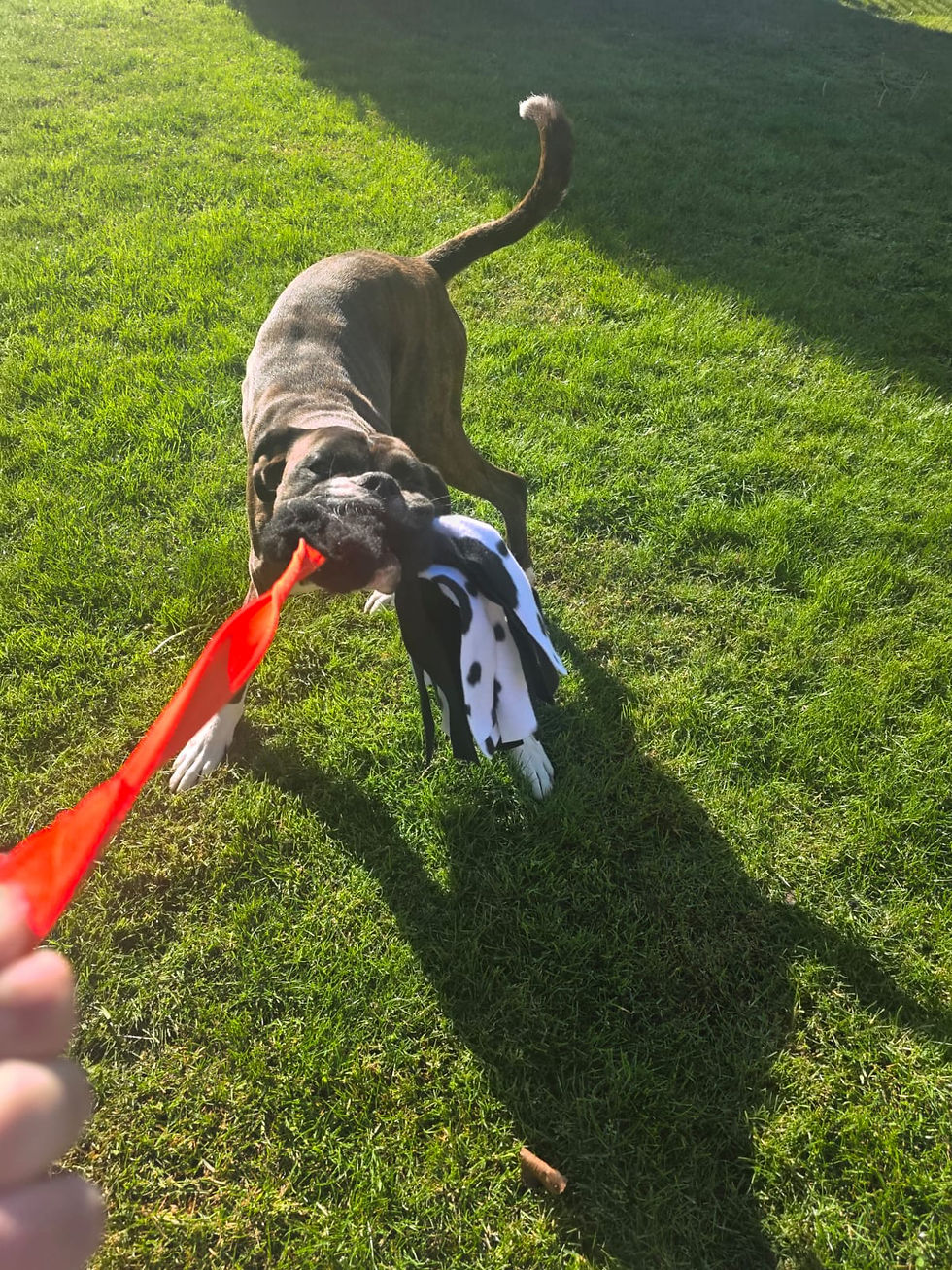
Long-handled tug toys or chaser-style toys are particularly effective because they allow you to interact without putting your hands in the bite zone.
When your puppy targets your hands or feet:
calmly remove your body from the situation if needed
present the toy
encourage engagement with movement rather than pressure or excitement
Consistency matters more than intensity.
Supporting overtired or overstimulated puppies
A large proportion of biting is linked to regulation—either too much arousal or too little rest.
If your puppy is overtired, they are far more likely to:
lose impulse control
bite repeatedly
struggle to settle
In these moments, the most helpful intervention is often not more stimulation, but less.
Support them with:
calm downtime
a safe resting space
gentle chewing outlets
reduced interaction until they settle
Chewing can be a powerful self-regulation tool, especially when a puppy is struggling to decompress.
Teething support
If your puppy is in a teething phase, provide appropriate outlets for oral comfort.
This can include:
chilled or frozen items (where appropriate)
textured enrichment toys that satisfy oral needs
Natural chews such as rabbit ears or goat ears
The goal is not to stop chewing—it is to channel it safely.
How to play without encouraging biting
Play is important, but the type of play matters.
Fast, chaotic, hand-based play often increases biting because it:
raises arousal quickly
keeps hands in the “target zone”
encourages grabbing behaviours
Instead, aim for structured movement-based play.
Helpful guidelines:
keep toys low and moving across the ground
use side-to-side movement rather than fast vertical movement
allow the puppy to chase and pounce rather than collide with hands
keep sessions short and predictable
Avoid using your hands as toys. This includes rough play, wrestling, or encouraging grabbing of fingers or sleeves.
Long-term learning: what actually reduces biting
Puppies learn through repetition. Over time, you are shaping:
what is worth biting
what results in continued interaction
what results in calm or pause
The aim is to consistently teach:
“Biting humans does not continue the interaction. Biting toys does.”
That means:
redirecting every time (not occasionally)
avoiding reinforcement of hand biting
ensuring appropriate outlets are always available
supporting regulation through sleep, structure, and enrichment
Other important factors to consider
If biting feels persistent or escalating, it is worth reviewing the wider picture:
handling experiences (is the puppy comfortable with touch?)
physical and mental enrichment levels
hunger or diet suitability
teething stage
toilet routine clarity
medical considerations (including parasite control)
early frustration or resource-related behaviours
Puppy behaviour is rarely one single issue—it is usually a combination of development, environment, and learning history.
Helping your puppy succeed (not just “stop biting”)
The most effective approach to puppy biting is not suppression—it is redirection, structure, and meeting underlying needs.
When puppies are given:
appropriate outlets for chewing and play
predictable routines
enough rest
and clear guidance on what to bite
…biting naturally reduces over time.
Supporting tools that can help
Some puppies benefit from additional enrichment tools that make redirection easier and more engaging.
Long-handled tug toys, for example, can help maintain safe distance during play while still meeting the puppy’s need for chase, grab, and interaction.
You can explore suitable enrichment toys here: https://thedoghouseftf.etsy.com


Comments